For the last five to seven years, exterior design lived at two extremes. On one end, the stark black-and-white of the modern farmhouse. On the other, the cool, blue-based grays that defined the 2010s. Both had their moment. But in 2026, that moment is ending.
The shift happening this year is unmistakable: homeowners and designers are craving warmth, dimension, and a genuine connection to nature. The cold, sterile palettes are giving way to grounded, organic tones inspired by the landscape, colors that feel welcoming rather than austere. Even the industry’s biggest name signaled it, with James Hardie naming Iron Gray, a deep, adaptable neutral, its 2026 Color of the Year, reflecting how homeowners now want drama delivered with softness rather than harsh contrast.
Whether you’re upgrading to fiber cement, premium vinyl, or composite siding, color is the single most important curb-appeal decision you’ll make, and one you’ll live with for 20 years or more. Here are the top five siding color trends defining homes in 2026.


Trend #1: Nature-Inspired Greens
Green has quietly become the new neutral, and it’s leading the 2026 palette. Think sage, olive, muted moss, and deep forest green, sophisticated, earthy shades rather than bright or artificial ones.
The reason green has taken off is that it behaves like a color neutral. It blends effortlessly with natural landscaping, stone facades, and wooded lots, giving a home a calm, grounded presence that feels timeless rather than trendy. In strong sun, a dusty or muted green tends to read better than a saturated forest green, aging gracefully as the light shifts through the day.
For pairings, nature-inspired greens look striking against natural cedar or warm woodgrain accents, bronze window frames, and creamy off-white trim. Warmer greens suit brown-toned roofs, while cooler sages pair beautifully with charcoal roofing.
Popular examples include James Hardie Mountain Sage, the green leading the trend this year, along with paint-matched shades like Sherwin-Williams Evergreen Fog for those field-painting their siding.
Trend #2: Warm Neutrals and “Greiges”
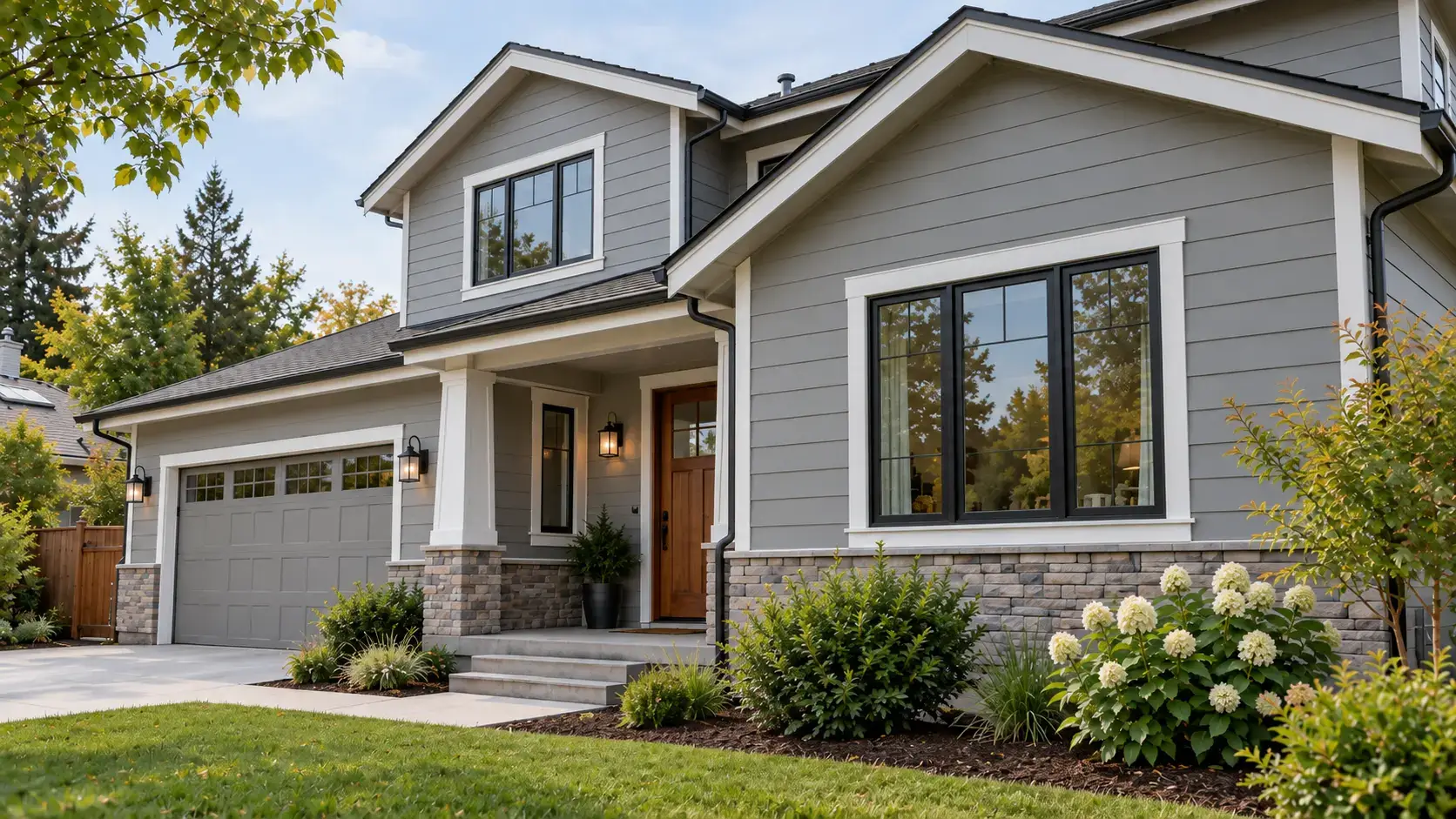
The blue-based grays that ruled the last decade are now reading as cold and sterile, and homeowners are trading them for warmer, sandier tones. This is the “goodbye, cool gray” trend, and it’s one of the strongest movements of 2026.
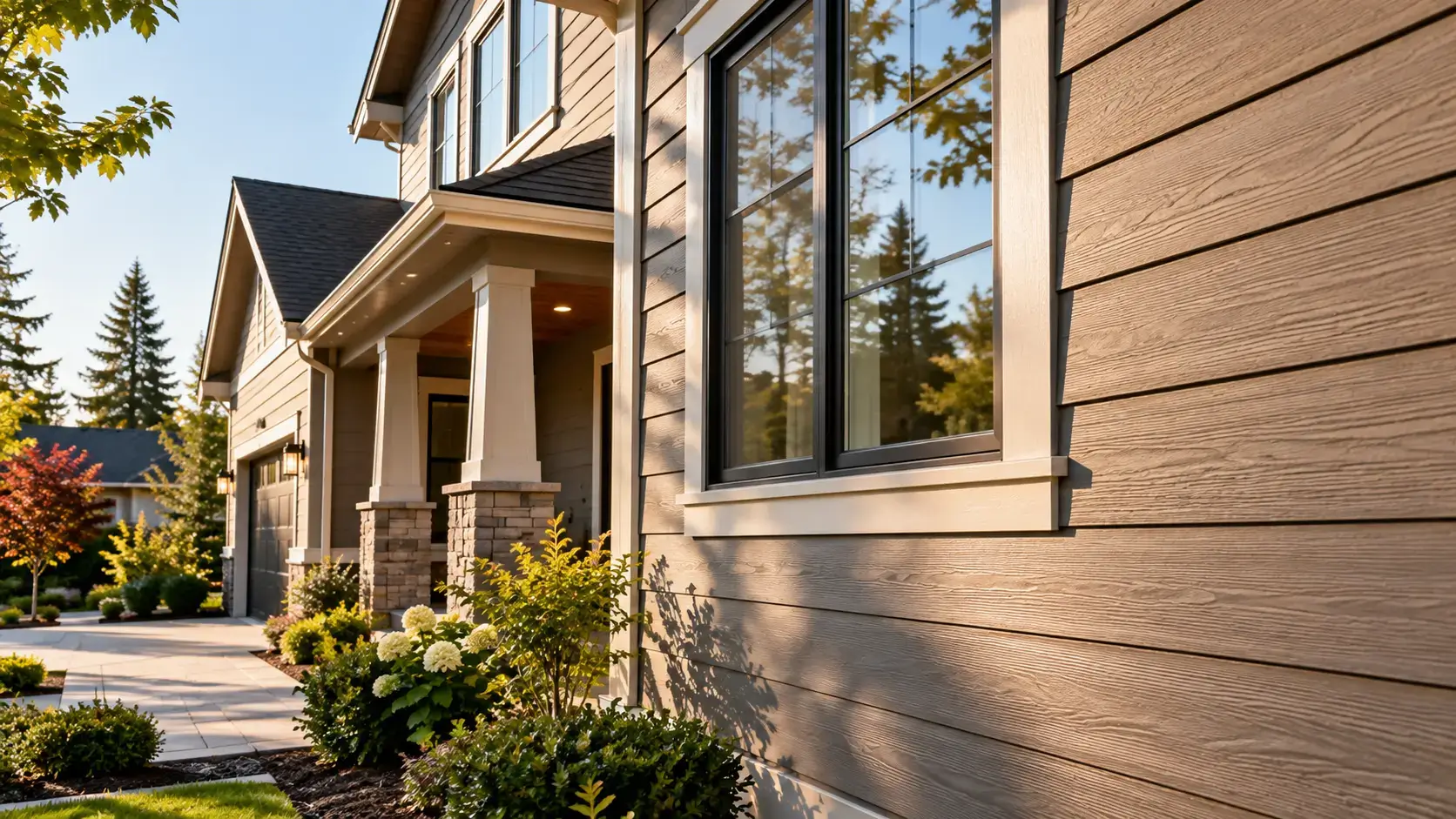
The 2026 warm neutral is khaki, mushroom, putty, oatmeal, warm beige, and taupe, tones that feel inviting and sophisticated without sliding into flat, dated “builder beige.” These colors update a home without committing to a bold statement, which is a big part of their appeal.
Warm neutrals pair beautifully with natural brick, dark espresso trim, and mixed stone. One especially current approach is color drenching, or tone-on-tone styling, where the trim is just one shade lighter or darker than the siding for a refined, monochromatic look.
Popular examples include James Hardie Monterey Taupe and Cobble Stone, both warm neutrals that have proven especially popular in Northern California and other high-sun regions, where they complement Mediterranean-style homes and resist the washed-out look that intense sun can give cooler tones.
Trend #3: Moody Charcoals and Soft Darks
The stark, jet-black house has peaked. But homeowners still want drama and modern impact, and in 2026 they’re getting it from softer darks: deep graphite, charcoal, dark navy-gray, and iron-toned shades.
The difference is subtlety. Where pure black can look harsh and photograph as a flat, heavy block, charcoal and deep iron colors deliver that moody, sophisticated aesthetic while adapting far better to changing sunlight. They shift and soften through the day rather than reading as a single dark mass. This is exactly the thinking behind James Hardie’s choice of Iron Gray as its 2026 Color of the Year: a deep neutral that can read charcoal, smoky blue, or near-black depending on the light and surrounding colors.
The key to pulling off a dark exterior is contrast and warmth. Crisp white trim creates a sharp, transitional look, while pairing charcoal siding with rich, warm woods, like a mahogany-stained front door or natural wood porch columns, and bronze accents softens the darkness into something elegant rather than severe.
Popular examples include James Hardie Iron Gray and Night Gray, with Sherwin-Williams Iron Ore as a paint-matched equivalent.
Trend #4: Creamy, Warm Whites
White isn’t going anywhere, but the kind of white is changing. The high-contrast, pure optic white of the modern farmhouse era is softening into warmer, creamier tones: alabaster, warm ivory, and soft off-whites.
There’s a practical logic here alongside the aesthetic one. Pure bright white can look blinding in direct sun and shows dirt readily. Warm, creamy whites deliver the same bright, clean, fresh appearance but feel more welcoming and are far more forgiving over time. They give you the crisp look without the glare or the constant cleaning.
In 2026, warm whites are styled differently than they were a few years ago. Instead of stark black accents, designers are pairing them with bronze gutters, copper light fixtures, and soft gray or greige trim for a look that’s bright but grounded.
Popular examples include James Hardie Arctic White for a clean warm white, with Benjamin Moore Simply White as a well-loved paint-matched option.
Trend #5: Rich Earth Tones and Mixed Woodgrains
The final trend is the boldest, driven by the rise of organic modern and mid-century revival architecture. It’s a move toward rich, warm earth tones, terracotta, warm clay, deep plummy browns, and warm timber shades, often combined with wood-look siding for texture and dimension.
What makes this trend distinctive is the mixing of materials. Homeowners are combining smooth lap siding in a solid earth tone with sections of wood-look siding, whether composite, metal, or fiber cement panels, to create visual texture and break up the facade. The result feels layered, natural, and architecturally intentional.
Rich earth tones pair beautifully with dark gray or black roofing, matte black hardware, and lush green landscaping, which makes the warm tones pop. Popular examples include James Hardie Timber Bark, a warm rich brown, often combined with wood-look accent panels for the mixed-material look that defines this trend.
How to Choose the Right Color for Your Home
Trends are a starting point, but the right color for your home depends on your home specifically. A few principles will keep you from a costly mistake on a decision that lasts decades.
Start with the fixed elements. Choose a siding color that harmonizes with the things you’re not changing: your roof color, existing stone or brickwork, and the character of your neighborhood and surroundings. Undertones matter enormously here. Warm roofs (brown and tan blends) pair with cream, greige, and sage, while cool roofs (slate and blue-gray) suit cooler grays, navy, and crisp white. When undertones align, the whole exterior looks intentional. When they clash, it feels subtly off.
Always test in real light. Siding colors change dramatically between morning shade and harsh afternoon sun, and a shade that looks perfect on a small chip can read completely different across a full wall. Get large samples and view them on your actual house, at different times of day, before committing.
And remember the stakes. Your siding color will likely last 20 to 30 years, and repainting a fiber cement or engineered wood exterior down the road can run thousands of dollars. Getting it right the first time is worth the extra care, which is exactly why professional design guidance pays off. We can provide physical siding samples and help you visualize these 2026 trends on your actual home before you commit. Reach out for a design consultation and we’ll help you choose a color that looks right in your light, suits your home’s fixed elements, and holds its beauty for decades.
Frequently Asked Questions
What is the most popular siding color for 2026?
The biggest movement in 2026 is toward warm, nature-inspired tones: sage and muted greens, warm neutrals and greiges, and softer charcoals. James Hardie named Iron Gray, an adaptable deep neutral, its 2026 Color of the Year. Overall, homeowners are moving away from cool gray and stark black-and-white toward warmer, grounded palettes.
Are gray houses still in style in 2026?
Cool, blue-based grays are on the way out, now reading as cold and dated. But warm grays and greiges (gray with warm undertones) are very much in style, as are softer charcoals. The shift is about undertone: warm grays feel current, while the cool grays of the 2010s feel sterile.
What are the best James Hardie colors for 2026?
Popular 2026 James Hardie colors include Mountain Sage (the leading green), Monterey Taupe and Cobble Stone (warm neutrals), Iron Gray and Night Gray (charcoals), Arctic White (warm white), and Timber Bark (rich brown). Iron Gray is James Hardie’s 2026 Color of the Year. The best choice depends on your roof, surroundings, and light.
Is dark siding a good idea?
Dark siding remains popular in 2026, but the approach has shifted from stark black to softer charcoals and deep iron tones that adapt better to sunlight. The key is balance: pair dark siding with warm wood accents, bronze fixtures, or crisp trim so it reads as elegant rather than harsh. Note that very dark colors can show dust more readily.
What siding color has the best resale value?
Timeless, warm neutrals and heritage greens tend to perform best for resale because they appeal broadly and photograph beautifully in listings. High-contrast combinations like charcoal roofing with warm white siding also have strong appeal. Since your color lasts decades, choosing a grounded, timeless shade over a highly trend-driven one is the safer long-term bet.
How do I choose a siding color that won’t look dated?
Lean toward nature-inspired, warm-undertoned colors rather than highly saturated or of-the-moment shades, harmonize with your fixed elements (roof, stone, brick), and test large samples in real light at different times of day. Warm neutrals, muted greens, and soft charcoals are trending precisely because they read as timeless rather than trendy.
The Bottom Line
The story of 2026 siding color is warmth. After years of cool grays and stark contrasts, homeowners are embracing grounded, nature-inspired palettes: sage and olive greens, warm neutrals and greiges, softer charcoals, creamy warm whites, and rich earth tones paired with wood-look texture. These colors feel welcoming, age gracefully, and read as timeless rather than trend-chasing, which matters when the choice lasts decades.
The most important step is choosing a color that works on your specific home, in your specific light, alongside the elements you’re not changing. Reach out for a design consultation, and we’ll bring physical samples, help you visualize these 2026 trends on your actual home, and guide you to a color you’ll love for years to come.